
Food is how Todd and I get to know a place. Not the famous restaurants, the ordinary ones. The market, the corner bar, the long lunch that turns into the whole afternoon.
You can read a country’s history in a museum, or you can taste it at a table where the neighbors eat. We have done both, and the table teaches us more.
Food was the first thing that pulled us abroad. Our honeymoon ran on chimichurri and red wine, and somewhere in there we realized we would rather plan a trip around a meal than a monument.
Todd is the baker of the family and a great sous chef. I cook pretty well and make a mean cocktail. So when we land somewhere new, the first thing we hunt down is the market, the bakery, and the bar where the regulars go.
We are not food critics and our palates are gloriously high-low. We will happily pay for a tasting menu one night and be just as thrilled by a paper plate of street food the next.
The first morning in a new place, we go to the market. Not to buy much, just to look. A market tells you what is in season, what people actually cook, and how much things should cost before anyone rounds the price up for the tourist.
We treat it like a museum we get to eat. We point at the thing we don’t recognize and buy one. We watch what the grandmother ahead of us picks and copy her. Half our meals on a trip are just whatever looked good at a stall that morning, carried home and cooked in whatever sad little pan the apartment came with.
It is the cheapest, most reliable way we know to eat well and feel like we live somewhere instead of passing through. You learn a place fast when you are buying its dinner.
A market also tells you the truth about a country’s seasons in a way no menu does. Strawberries piled to the ceiling in spring, chestnuts and squash in the fall, the fish that is cheap because the boats just came in. Eat what the market is pushing that week and you eat the way the place actually eats, for a fraction of what the tourist restaurants charge for a sadder version of the same thing.
None of this takes a foodie budget or a guidebook. It just takes a little nerve and a willingness to point at things you can’t pronounce.
A full room of locals at an odd hour beats any review. If the neighbors eat there on a Tuesday, we eat there too.
The dish we can’t pronounce is usually the one worth getting. We point, we guess, and we have rarely regretted it.
One class teaches you the dish, the market, and half the culture behind it. We build whole weeks around a good one.
The bar is where you talk to people. We have gotten our best recommendations from a bartender who took pity on two confused Americans.
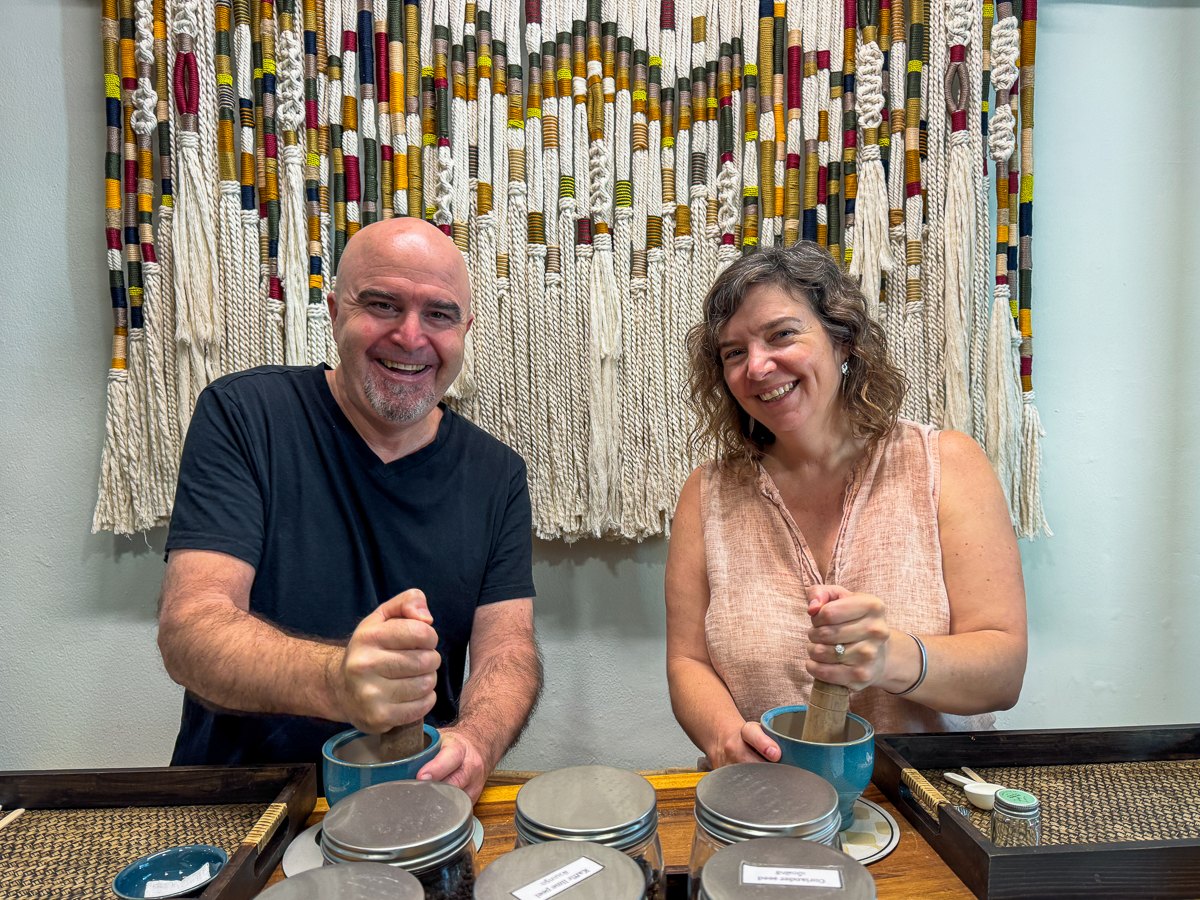
The single best thing we do in a new country is take a cooking class early. Not a fancy one. The kind run out of someone’s home, where you start at their market and end at their table.
You walk away with more than a recipe. You learn which stall has the right chilies, why the dish is cooked the way it is, and a dozen small things no restaurant meal would ever tell you. Todd does most of the baking back home, so a new technique or a strange ingredient is reason enough for us to stay an extra week somewhere. We have ground spices we couldn’t name and rolled dough we definitely botched, and we came home cooking things we now make for friends. A class is the fastest shortcut into a culture we have found.
Somewhere along the way we stopped seeing a long lunch as time we should be using for something else. Most days a two-hour lunch is the best thing we do.
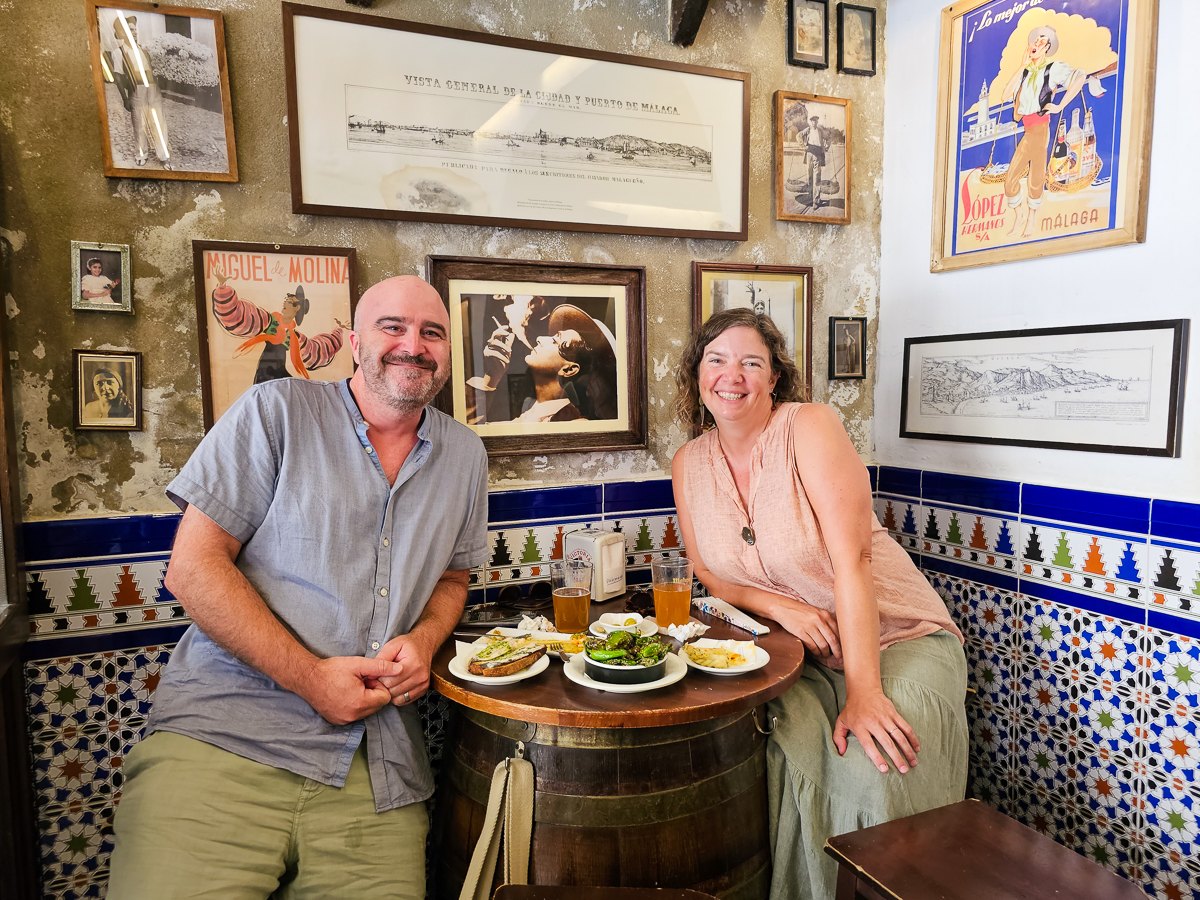
In Spain we learned to eat the way the locals do, which is slowly and late and without an eye on the clock. A few small plates, a glass of something local, the table next to you arguing happily about football. You are watching how a place actually lives, from the best seat in the house. We have planned entire travel days around lunch and built the rest of the afternoon on top of wherever it left us. Sit down to eat the way locals do and you learn more about a culture than a guided tour will ever teach you.
Food gets us in the door, but it is never only about eating. The same curiosity that makes us order the weird dish is what pulls us into everything else about a place.
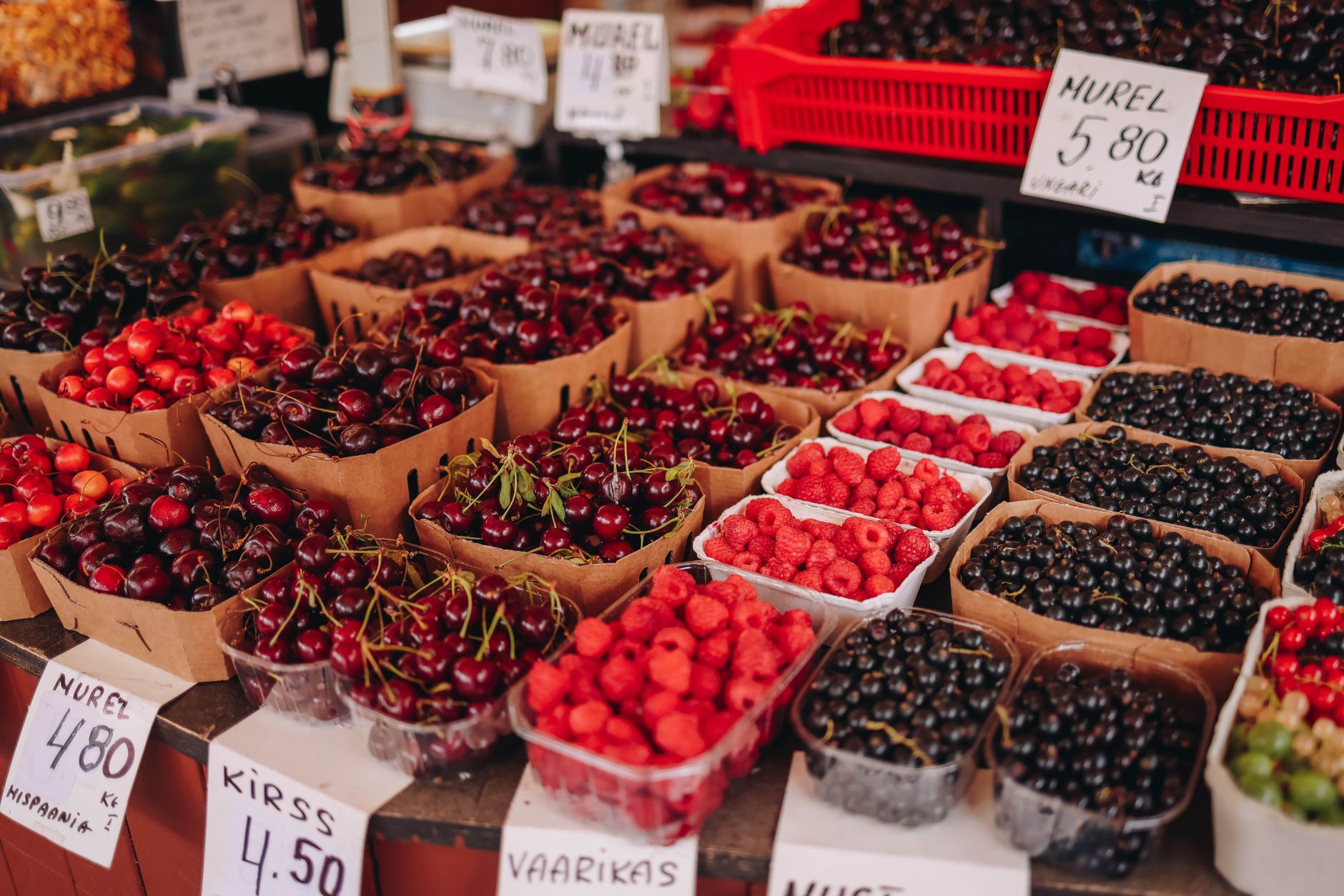
What is piled high and what is precious, what is in season, how people haggle or don’t. A market is a culture with the prices left on.
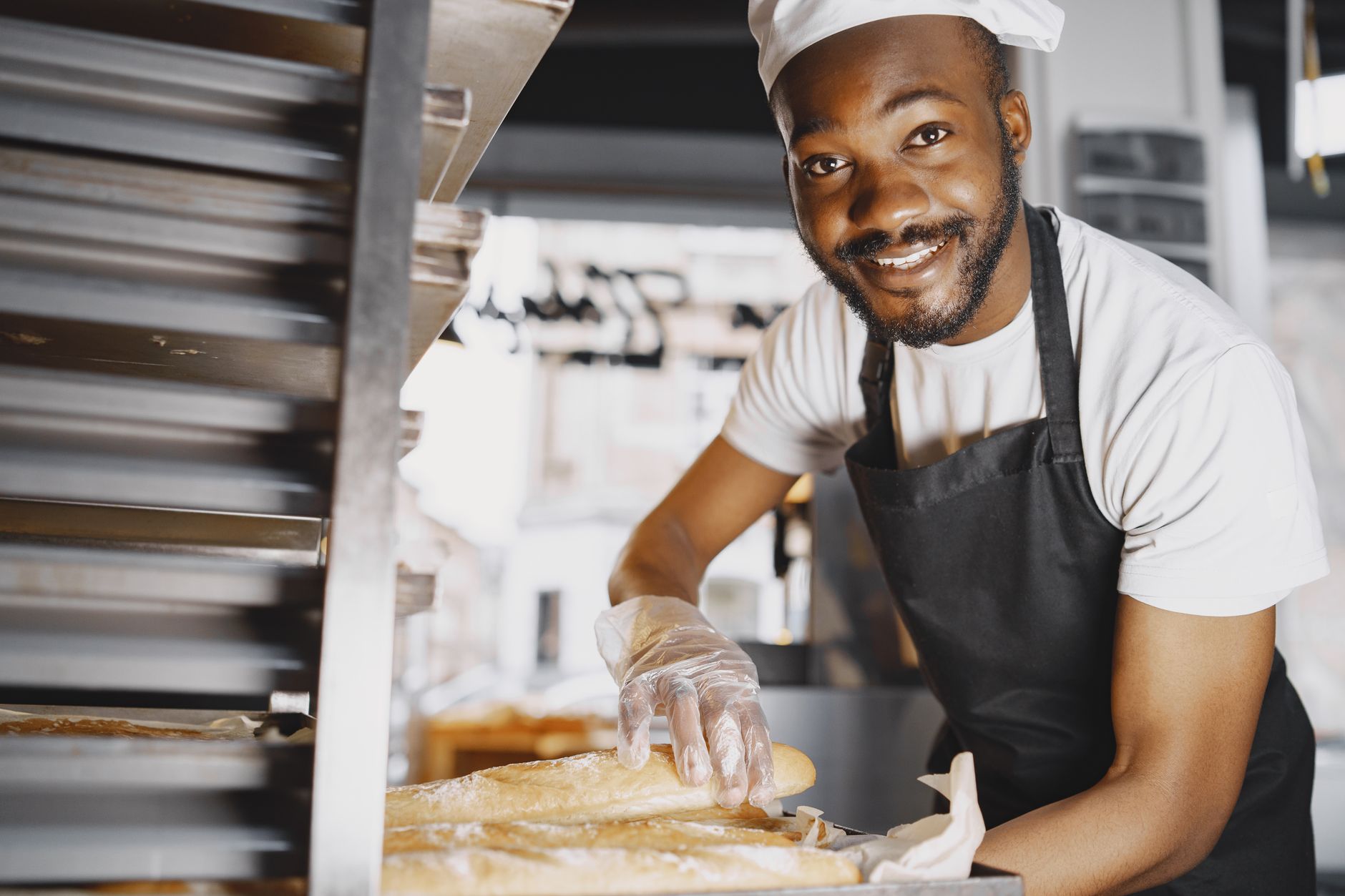
Every place has the thing it eats every single day. The morning bread, the afternoon pastry, the coffee everyone stops for. Find that and you have found the rhythm.
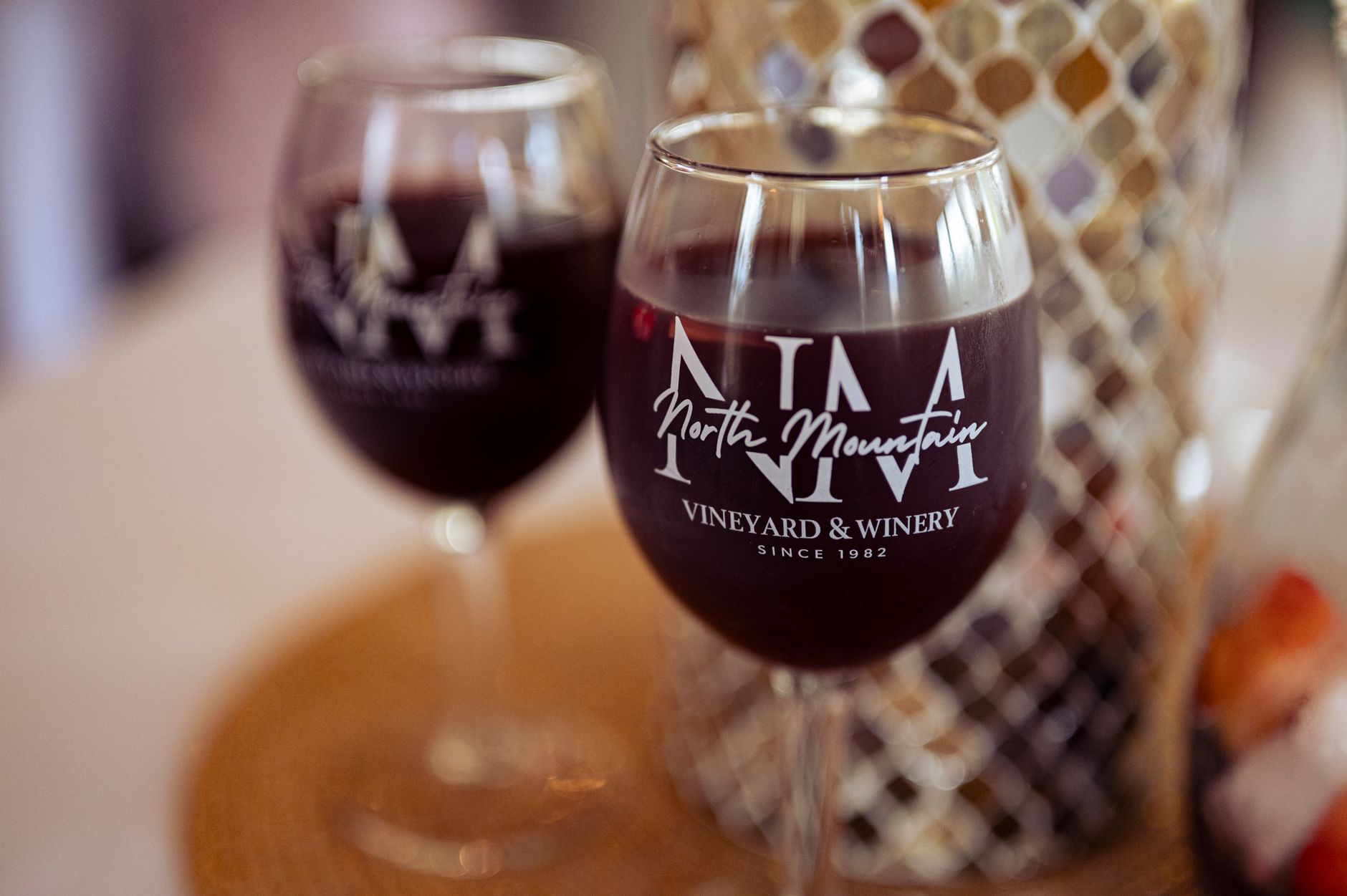
We order the local wine, the regional beer, the thing made down the road. It is cheaper, it is better here than it will ever be at home, and it comes with a story.
Mairin
We want to kill one myth about eating well abroad: that it has to be expensive. Some of the best meals of our lives cost a couple of euros and came on a paper plate. Some cost a small fortune and were worth every cent. We chase both, with zero guilt about either.
Street food is where a country cooks for itself, fast and cheap and honest. The night market stall with one thing on the menu has usually been making that one thing for thirty years. We seek those out as eagerly as any restaurant, and they have rarely let us down.
Then, every so often, we splurge. One proper meal at a place we have read about for months, savored slowly, no checking the bill. The trick is to spend where it counts and save where it does not, which leaves room for both the two-euro lunch and the once-a-trip blowout. That is how we eat at home too, and it travels just fine.
The part of food travel that lasts longest is the part you carry home in your hands. Not the fridge magnet. The dish you learned to make, the spice you now keep in the cupboard, the technique you stole from a cook who was kind enough to show you.
Todd bakes, so we come home from almost every trip with something new in the rotation. A bread we watched a baker shape. A way of cooking rice we would never have guessed. We have carried home a ridiculous spiced biscuit from a harbor town just to reverse-engineer it in our own kitchen.
Months later, that is what brings the trip back. You make the dish on a normal Tuesday and you are right back at the market where you learned it. A photo fades on your phone. A recipe you actually cook stays with you for years, and you can share it. That is the souvenir we hunt for now.
Eating your way into a culture comes with a small responsibility, and it is an easy one. You are a guest. Act like it. Learn please and thank you in the language before you go. Try the thing you are offered even if it scares you a little. Tip the way locals tip, not more to show off and not less to save a euro.
We get it wrong all the time. We have ordered badly, mangled the words, and sat there smiling while a kind stranger figured out what on earth we meant. That fumbling is part of it. People are almost always generous with travelers who are clearly trying, and almost never with the ones who treat a country like a buffet.
Show up curious and a little humble, and the table opens right up. That has been true for us in every country we have eaten our way through.
Our short, practical guide to planning a slower trip: how to pick a base, how long to stay, and how to travel deeper without the overwhelm.
Get the free guideWe send slow-travel tips and nothing else. Unsubscribe anytime.